




.svg) Entrez en contact
Entrez en contactDes solutions
Tous droits réservés © 2025 Active Tagging Limited
Xtag Medical et les marques associées font partie d'Active Tagging Limited. Enregistré en Angleterre. Numéro d'enregistrement 6071636. Numéro de TVA 902605849.

This article explains what a baby tagging system is, how it works, and how to assess whether your maternity unit would benefit from one.
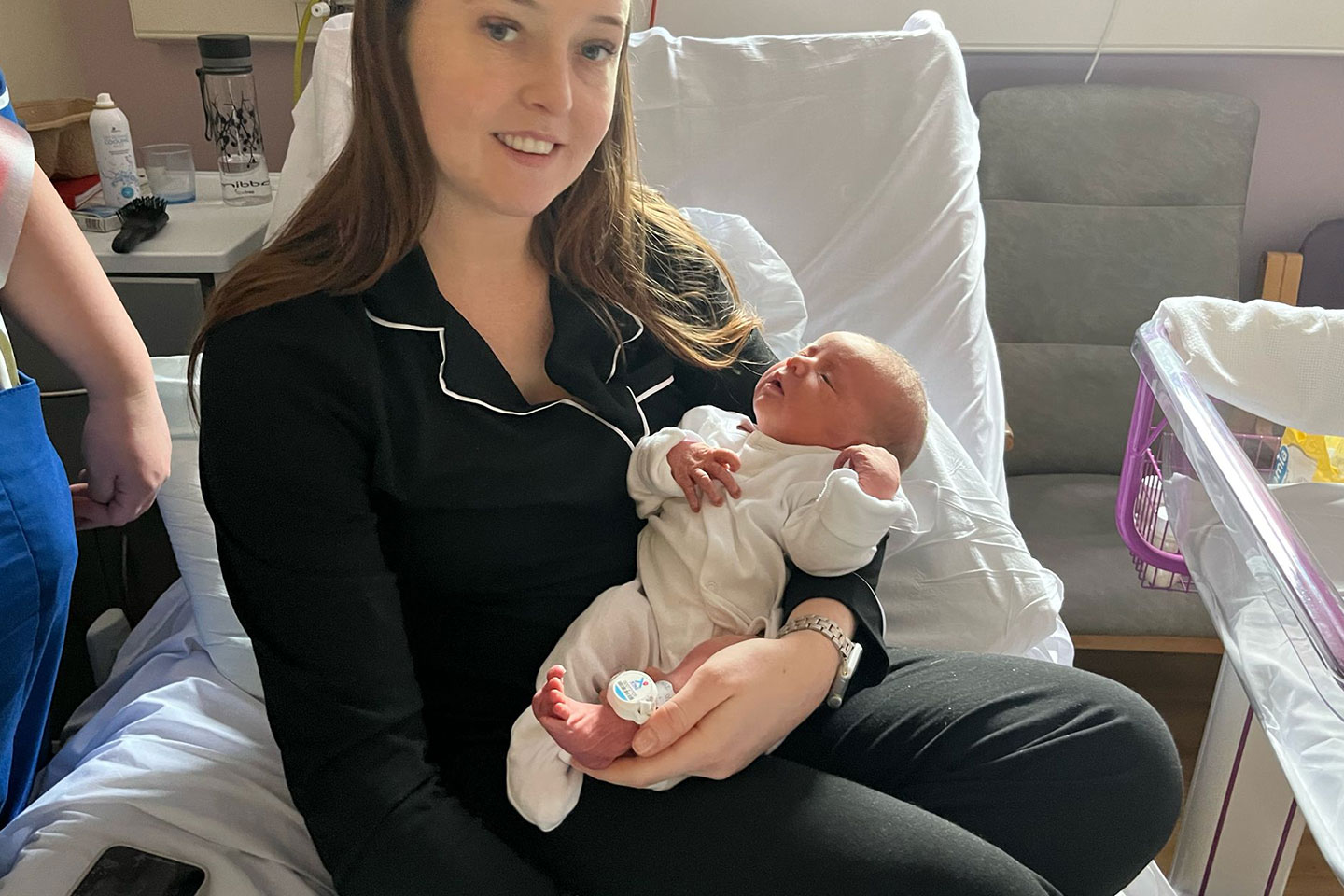
Patient safety is a fundamental priority for every NHS maternity service. The impact of even a single security breach can be profound, affecting families, staff, and Trust governance.
As a result, many NHS Trusts are reviewing whether a baby tagging system (also known as an infant protection system or an infant security system) should form part of their maternity ward security strategy.
This article explains what a baby tagging system is, how it works, and how to assess whether your maternity unit would benefit from one.
A baby tagging system is a clinical security solution designed to help prevent the unauthorised removal of newborn babies from maternity wards.
In simple terms, the system:
These systems are widely used in maternity units across the NHS and internationally as part of a layered safeguarding approach.
Baby tagging systems are sometimes referred to as:
While functionality varies by provider, most modern systems follow a similar process:
Many systems can also support mother–baby pairing, adding an extra layer of reassurance during transfers and discharge processes, however this addition is rarely implemented in UK hospitals.
How infant protection systems work: Baby Tagging System.
Both stranger and family-related abduction incidents can happen at any time and NHS Trusts must plan for high-impact, low-frequency risks.
For senior leaders, these systems are less about reacting to incidents and more about demonstrating proactive risk mitigation.
Baby tagging systems are not mandated nationally across all NHS Trusts. However, many maternity units choose to implement them to support compliance with:
CQC inspections often look for evidence that risks have been identified and appropriately mitigated, particularly in environments caring for vulnerable patients such as newborns.
Not every maternity unit faces the same level of risk. However, a baby tagging system is often used in maternity hospitals where:
A formal maternity security risk assessment can help determine whether additional controls are appropriate.
A common concern raised by Heads of Midwifery and Ward Managers is whether technology adds burden to already stretched teams.
Well-designed baby tagging systems aim to:
The goal is to support staff, not replace clinical judgement or increase workload.
Modern baby tagging systems increasingly form part of a wider hospital safeguarding and security ecosystem, integrating with:
Some Trusts also use similar tagging technology in:
This consistency can simplify training and system management across the organisation.
When evaluating systems, NHS decision-makers typically consider:
Solutions such as XTAG Baby Tagging are designed specifically for healthcare environments, with a focus on reliability, clinical usability, and long-term support.
A baby tagging system is not a replacement for good clinical practice, strong policies, or trained staff. Instead, it acts as an additional safety layer, helping Trusts manage risk proactively and consistently.
For maternity units balancing openness, compassion, and safety, baby tagging systems can play an important role in:
Whether or not a maternity unit needs one depends on its unique layout, risk profile, and operational pressures - but for many NHS Trusts, it has become an essential part of modern maternity security.


.svg)

.svg)
.svg)


.svg)
